How Astro's Vincent Tjendra Built an Outlier Company by Focusing on Customers, Not Labels

Vincent Tjendra almost ignored Endeavor.
When the outreach first came in back in 2021, he did what most selective founders do: ignored it. He’d seen enough networks by then — the kind that promise transformative connections and deliver industry dinners. But something made him pause.
He did a quick scan of the board members and the people within the Endeavor network. The names were credible. The kind of credible you recognize not from conference stages but from companies that actually matter.
That small act of due diligence changed what came next — for Vincent, for Astro, and for how he now thinks about building companies at scale.
What changed his mind was simple: the people.
Today, Vincent leads Astro as one of Endeavor Indonesia’s Outlier entrepreneurs, operating at a scale few startups in Southeast Asia ever reach: real organizational scale, deliberate culture infrastructure, and a leadership team trusted with some of the company’s most sensitive information. His advice to founders coming up behind him is characteristically unvarnished:
"Don't focus on being an Outlier. Focus on your customers. Focus on your business. Then you'll become an Outlier. "
Vincent Tjendra, Co-Founder & CEO, Astro
Lesson #1: Great Networks Are About Direct 1-on-1 Access, Not Mass Events
What stood out most for Vincent wasn’t networking. It was the quality of the people around it, and the access.
One of the reasons behind the verdict was the Endeavor board’s credibility that signaled something important: these weren’t logo-collecting operators. They were builders who had done the hard thing and were, for reasons worth understanding, choosing to invest time in others anyway.
One of which, as part of Endeavor’s selection process — what the network calls “selection as service,” a process designed to develop as it evaluates — he was paired with Endeavor Board Member, Raul Oberman, on pitching and fundraising communication.
The feedback was direct.
"He went hard on pitching. But I took those skills directly into my fundraising conversations. How do you talk? How do you emphasize the key things in a very short amount of time? Tough love at the start — but I appreciate him for it."
Most founders never formally develop this. Having someone skilled enough to demand it, and honest enough to say when you’re getting it wrong, is rarer than it should be.
Most founder networks give you introductions. The best ones give you access. There’s a difference.
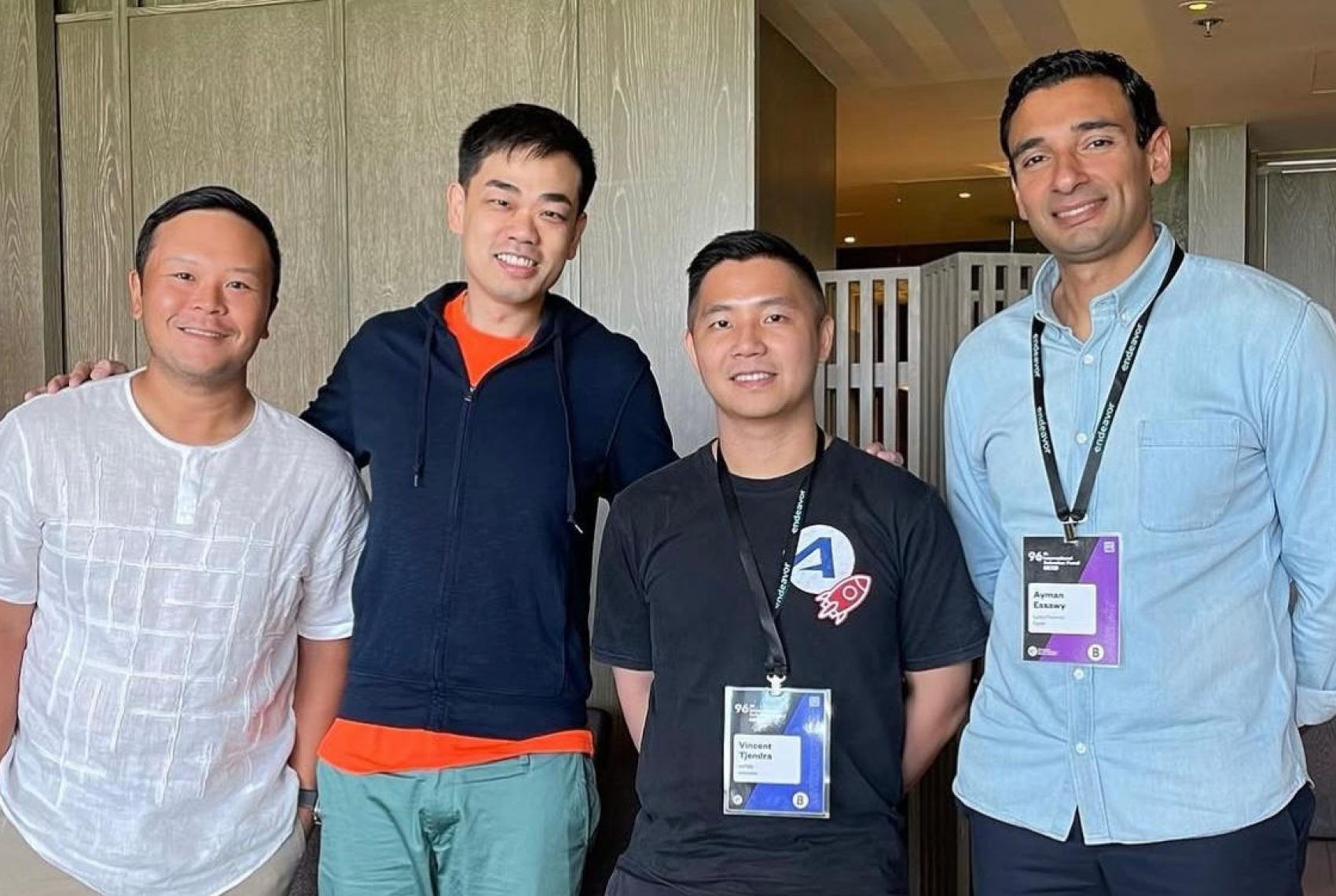
For Vincent, Endeavor opened doors to conversations and perspectives that would have been difficult to access anywhere else.
Another example was spending an hour with Martin Escobari — one of the most respected investors globally — reviewing your pitch deck slide-by-slide, at 7 am New York time, because he believes in you enough to give you an hour that would cost thousands to buy elsewhere.
"He’s probably seen tens of thousands of pitch decks. In that one hour, he went through mine — this slide has to be like this, this needs to say that. It was genuinely invaluable."
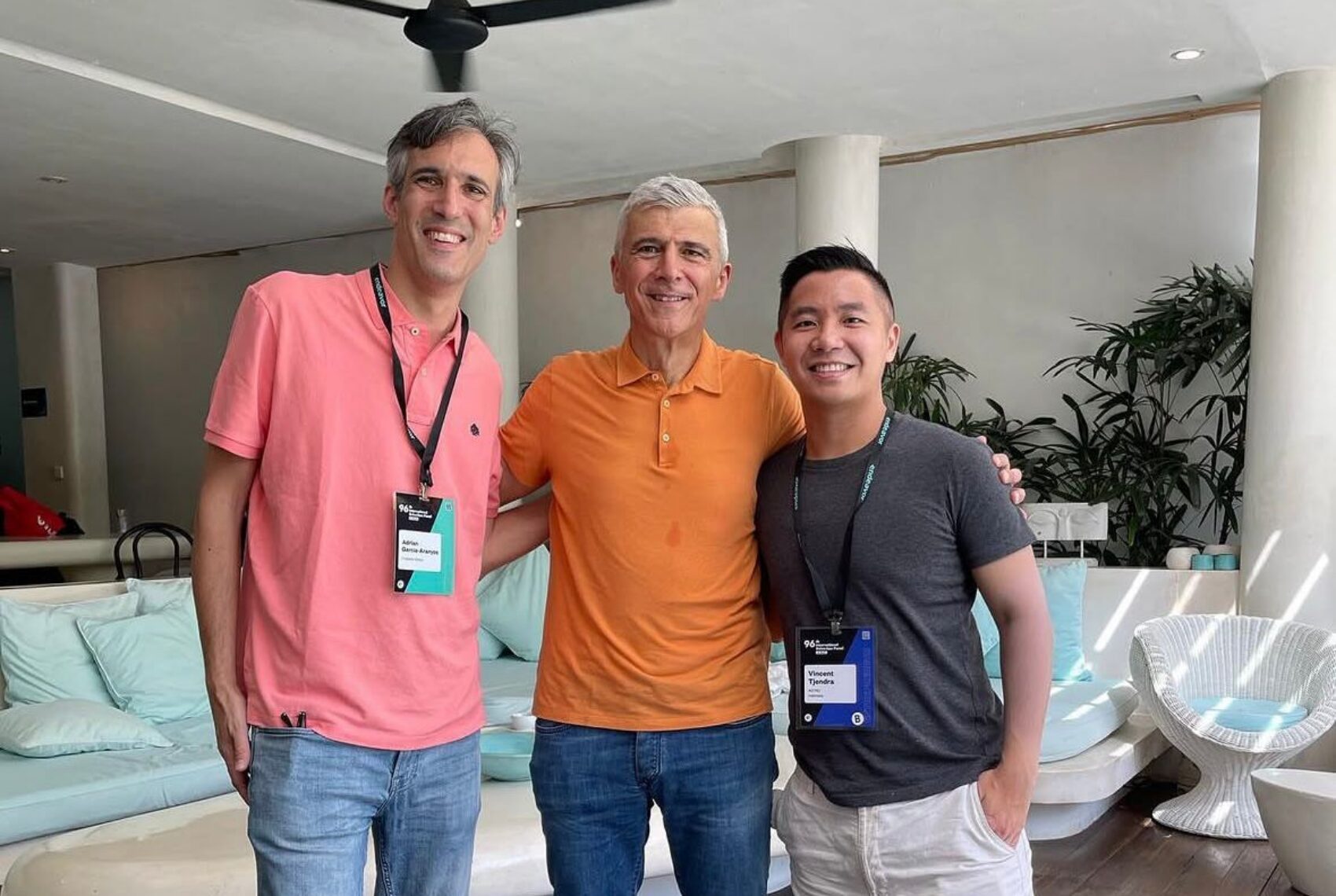
Another was a one-on-one conversation with Diego Piacentini, the person who had been Jeff Bezos’s M-1 — the executive who ran Amazon’s grocery vertical.
Not panels.
Not webinars.
A real conversation, with someone who had operated at a level most founders will never access through any other channel.
For founders, that’s the difference between networking and access.
These aren’t stories about lucky networking. They’re examples of what becomes possible inside an ecosystem structured around reciprocity: senior operators invest in earlier-stage founders because they once received the same investment — and because they continue to learn from it.
Knowledge doesn’t flow in one direction. It circulates — and every conversation compounds that circulation.
"As much as the other person learns from the mentoring, I also learn. When I’m sharing a problem, their perspective broadens my own horizon. It goes both ways."
Lesson #2: Fast Speed Is Good, But Great Velocity Is What Truly Matters
Most startups obsess over speed.
Move faster.
Launch faster.
Grow faster.
Vincent thinks in a different frame — one borrowed from physics. He prefers thinking about velocity.
"Speed is how fast you move. Velocity is how fast you move in the right direction. You can have enormous speed and zero velocity if you’re pointed wrong."
Most scaling companies accumulate significant momentum in the wrong direction before the misalignment becomes obvious. The question isn’t whether the team is moving — it’s whether the input metrics, the team’s energy, and the company’s capital are all pointed at the same objective.
You can move incredibly fast and still end up nowhere if your company is solving the wrong problem or measuring the wrong metrics.
As companies scale, alignment becomes more important than activity.
The question isn’t:
“How fast are we moving?”
It’s:
“Are we moving in the right direction?”
Lesson #3: Solve Problems Before They Become Problems
His second principle operates alongside this: foresight as a discipline. Rather than waiting for fires, one exercise Vincent uses regularly is asking himself:
What will keep me awake six to twelve months from now?
Then he starts working on it immediately.
"Any problem, given enough time, can be solved. But if you’ve run out of time, you’re always firefighting — and firefighting just makes you less effective. If you can anticipate 80 to 90% of what’s coming, you’re less reactive and more capable."
The goal isn’t predicting everything perfectly.
It’s reducing surprises.
Founders spend too much time reacting and not enough time preparing.
The earlier you start solving tomorrow’s problems, the fewer emergencies you’ll have later.
Lesson #4: Better Decisions Start with Better Context
Here’s a decision most founders won’t make: sharing the company’s full P&L — including revenue, runway, and cash balance — with the entire middle management layer. Fifty-plus people, with real numbers, and no filters.
Astro made that call.
Vincent shares financial information with more than 50 leaders across the company.
That includes:
- Revenue
- Runway
- Cash balance
- Financial risks
- Potential downside scenarios
Most founders wouldn’t do this.
Vincent believes it creates leverage.
"When people have the same data points as you, they make better decisions. Transparency isn’t a vulnerability — it’s a force multiplier."
Instead of three people carrying the burden alone, dozens of leaders can help solve the problem together.
What surprised him most was the reaction.
After one transparency session, a team member reached out and said:
“Now that I know what we’re facing, I want to fight harder.”
That’s not a culture you mandate. It’s one you build by demonstrating, repeatedly, that you trust people with the truth. The payoff isn’t just morale — it’s distributed problem-solving. Fifty-plus informed managers making better decisions beats three senior leaders carrying all the context alone.
Trust often creates ownership.
Ownership creates better companies.
Lesson #5: Culture Doesn’t Scale By Accident
Before Astro officially launched, the founding team sat down and wrote out what kind of company they wanted to build.
That became Astro’s SPACE culture framework:
- Supportive teamwork
- Purposeful goal clarity
- Adventurous ambition
- Customer obsession
- Evolving personally and professionally
More importantly, they built systems to protect it.
To protect it as the organization grew, Astro adopted a Bar Raiser process — inspired by Amazon — where designated senior team members hold veto authority in hiring assessments. The question in every hire isn’t just whether a candidate is capable. It’s whether bringing them in makes the culture stronger or dilutes it.
The question isn’t simply:
“Can they do the job?”
It’s:
“Will they make the company stronger?”
"Culture takes a long time to build. Every decision you make — who you hire, who you promote, who you don’t promote — either builds it or erodes it. We think about this constantly."

The implication for scaling founders is significant: culture is not an output of growth. It’s an input.
Get it right early, protect it deliberately, and it becomes a competitive advantage that compounds as headcount grows. Let it drift, and no amount of talent acquisition will compensate.
Lesson #6: Ask Your Network For Help Earlier
One of Vincent’s biggest mistakes was underutilizing Endeavor in the beginning.
Like many founders, he assumed he needed to have everything figured out before asking for help.
He now believes the opposite.
"I realized I didn't need to look good. I just needed to share the problem I was trying to solve."
Need expertise in AI?
Trying to hire for a new function?
Expanding into a new market?
Ask.
Networks only work when people know what you’re trying to solve.
Six Takeaways For Founders
- Treat your network like a precision tool, not a passive asset. The more specific the problem you bring, the better the output. Don’t arrive with vague goals. Show up with a real problem and let the network do its job.
- Distinguish speed from velocity. Movement is not the same as direction. Know your key input metrics, audit them regularly, and ask honestly whether they’re pointed at the outcome you’re trying to reach.
- Build foresight as a weekly habit. Ask yourself: what’s going to make it hard to sleep in 6 to 12 months? Then start working on it now, while you still have enough time to solve it properly.
- Trust your team with the full context. Radical transparency is a leverage point, not a liability. People with the same information you have will make better decisions — and fight harder when it counts.
- Earn the label by forgetting about the label. Don’t chase recognition or benchmarks. Focus on customers. Focus on building something that matters. The designation follows — it doesn’t lead.
- Don’t hesitate to ask for help. Be clear about the problem you’re trying to solve, and don’t be afraid or hesitant to reach out. Give your network the opportunity to help.
The Outlier Mindset
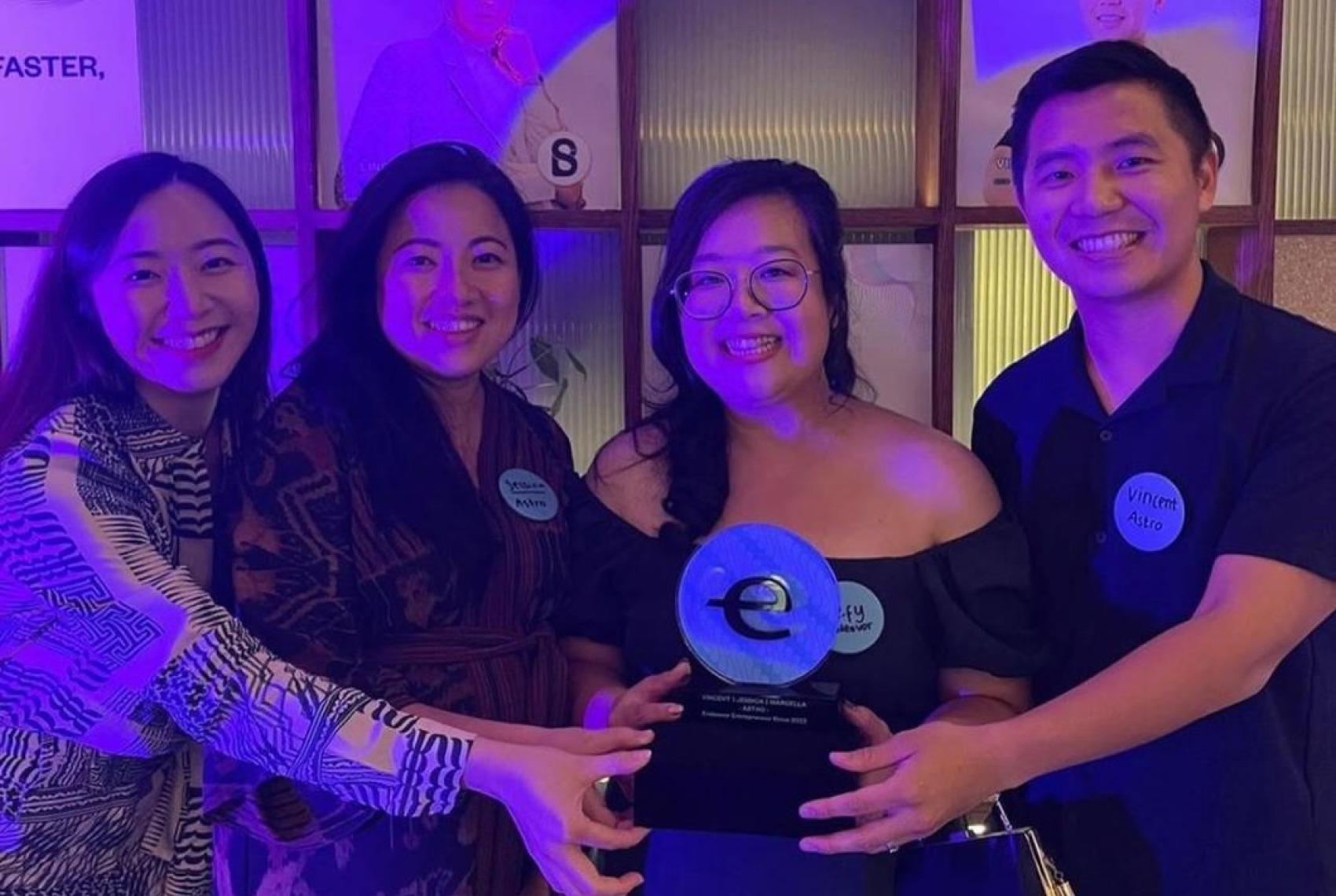
Being recognized as an Endeavor Outlier means Astro sits among the top-performing companies in Endeavor’s global network.
Vincent sees it as a benchmark, not a destination.
"It's good to know where you stand. Then the question becomes: how do you get better? After that, you get back to work."
Perhaps that’s the real lesson.
The founders who become outliers rarely spend much time trying to become outliers.
They’re too busy building.